


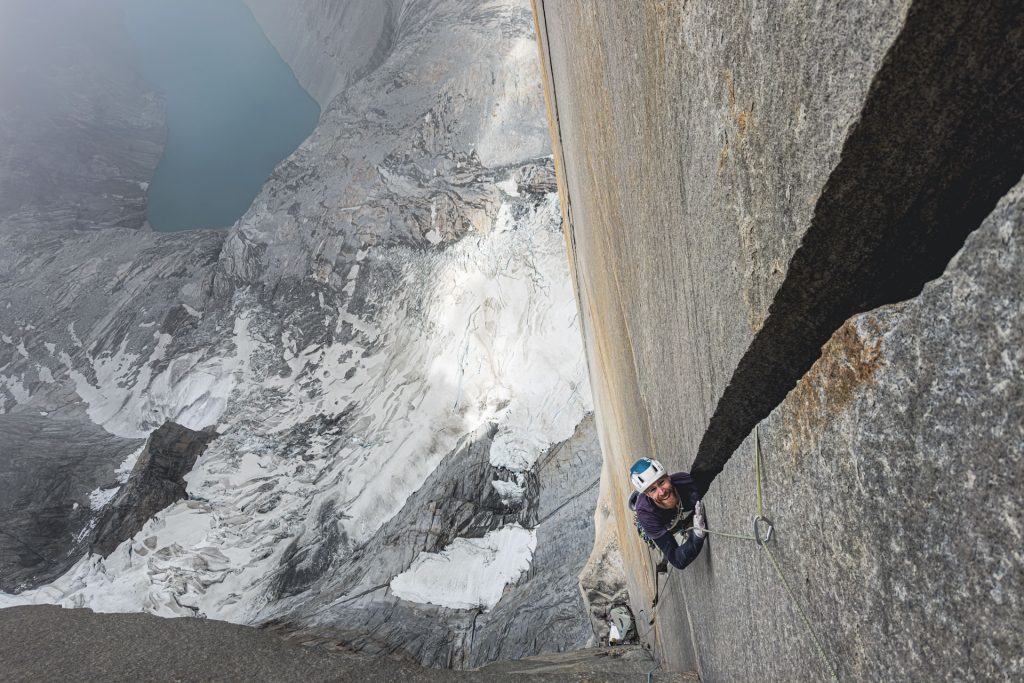
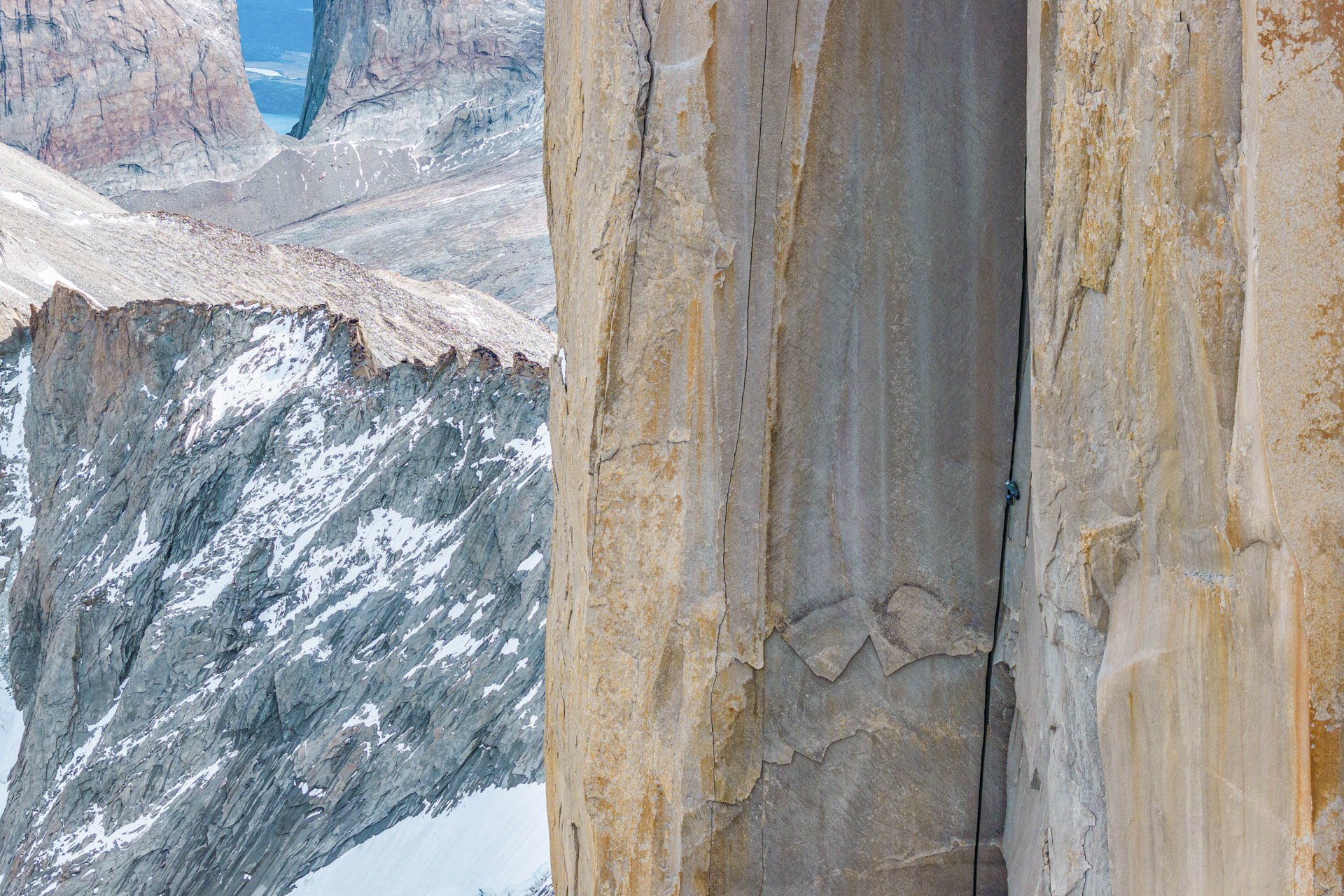
It is one of the most impressive big walls on the planet: the Torre Centrale del Paine in Chile has been the scene of some very significant climbs. But free climbs, particularly on the South African route, are very rare. After finally being free climbed in 2009, the 1,200 meters of this route became an obsession for Tommy Caldwell and Siebe Vanhee. On February 14, they succeeded in their challenge: twenty-four hours of non-stop effort to free climb Torre del Paine. A historic achievement!
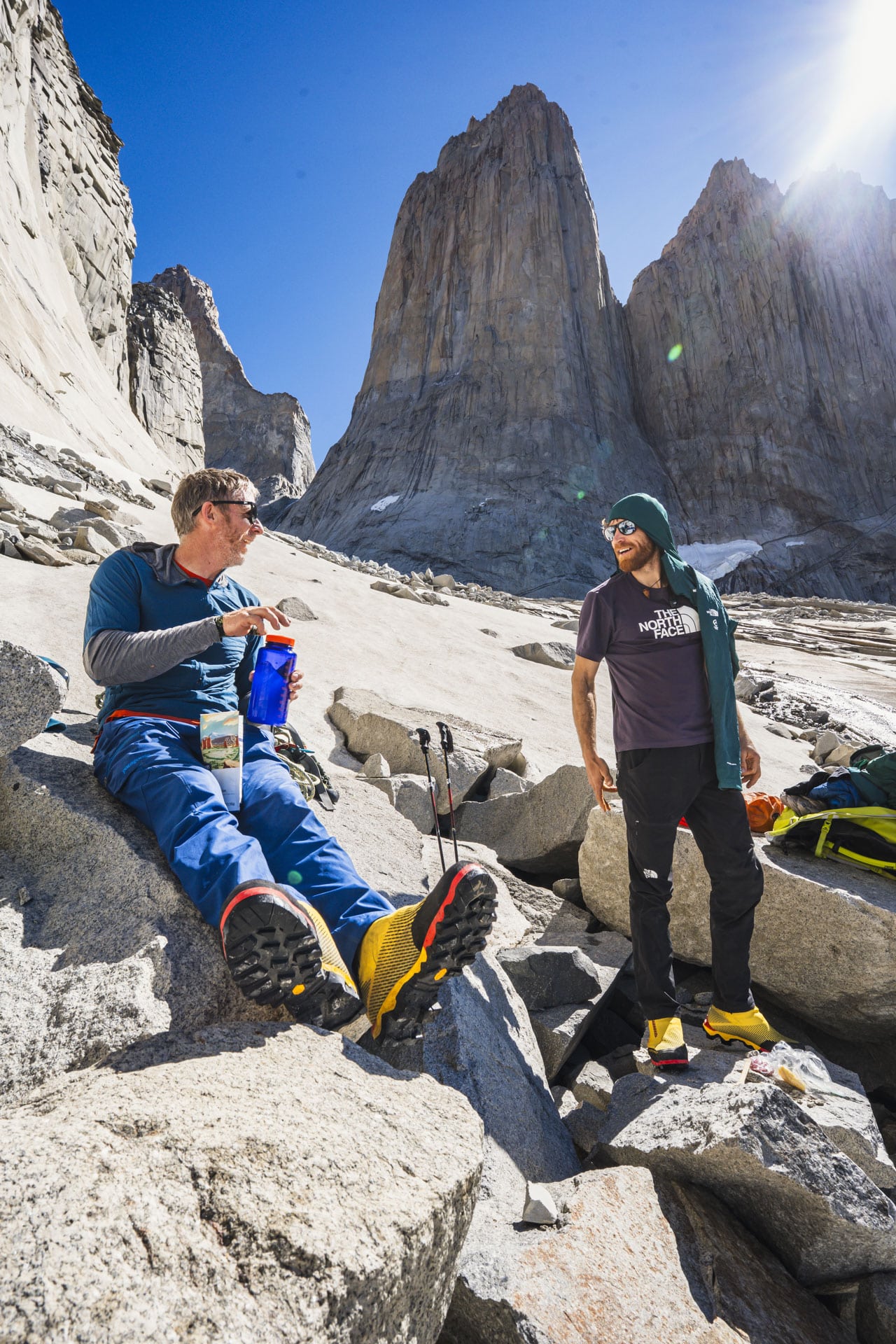
One is a veteran of El Capitan, a pioneer and the first climber to ascend the Dawn Wall more than ten years ago. The other is Belgian, and although he did not succeed on the Dawn Wall, he has conquered many other walls, including Torres del Paine, where he climbed Riders on the Storm in 2024. As a rope team, Tommy Caldwell and Siebe Vanhee brought together a wealth of experience and talent to achieve this historic feat: free climbing the Torre Centrale del Paine in a maximum of 24 hours.
An unlikely challenge given the route’s pedigree: 1,200 meters high, around 30 pitches up to 7b+, including very wide cracks. The first free ascent in 2009 took thirteen days of effort by another legendary rope team, consisting of Nico Favresse, Sean Villanueva, and Ben Ditto. Suffice to say that the difficult ratings, the difficult protection, and the often terrible weather make the idea of a free ascent unlikely, to say the least. So in less than twenty-four hours…
©Coll. Vanhee / Caldwell
© Felipe Nordenflyght / Matthew Tangerman
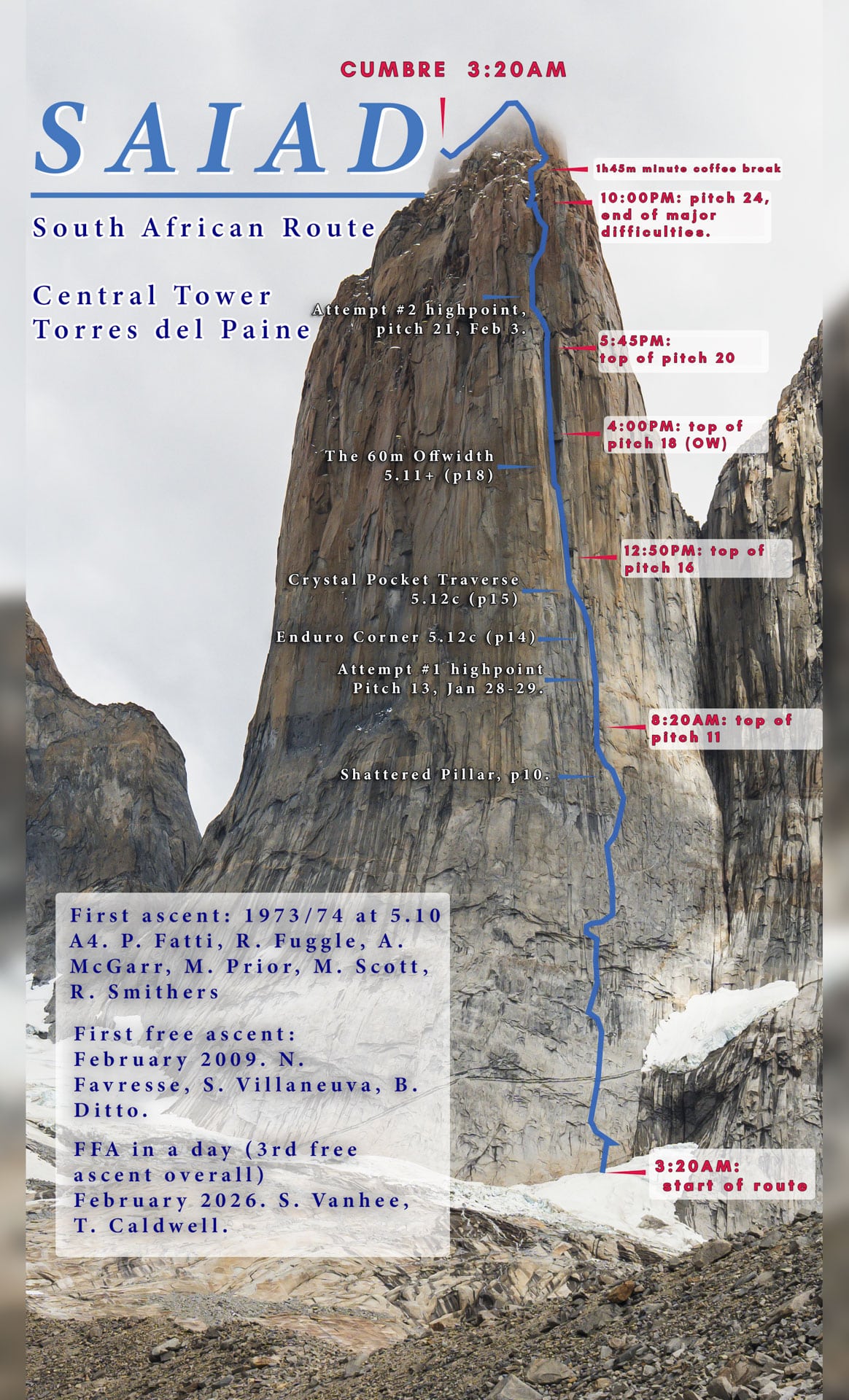
They set off at 3:20 a.m. on February 13, 2026. But the idea had been in the works for several years. Attempt after attempt, they believed in themselves. A first attempt on January 28 and 29, and a second from February 2 to 4, ended more or less in a storm. “Comparing El Cap to the east face of Torre Centrale would be like ignoring the weather in Patagonia,” Siebe Vanhee says ironically. The third attempt was the charm. It took them exactly 24 hours to reach the summit in complete darkness, before a grueling descent in bad weather: eight hours of rappelling in the Patagonian wind.
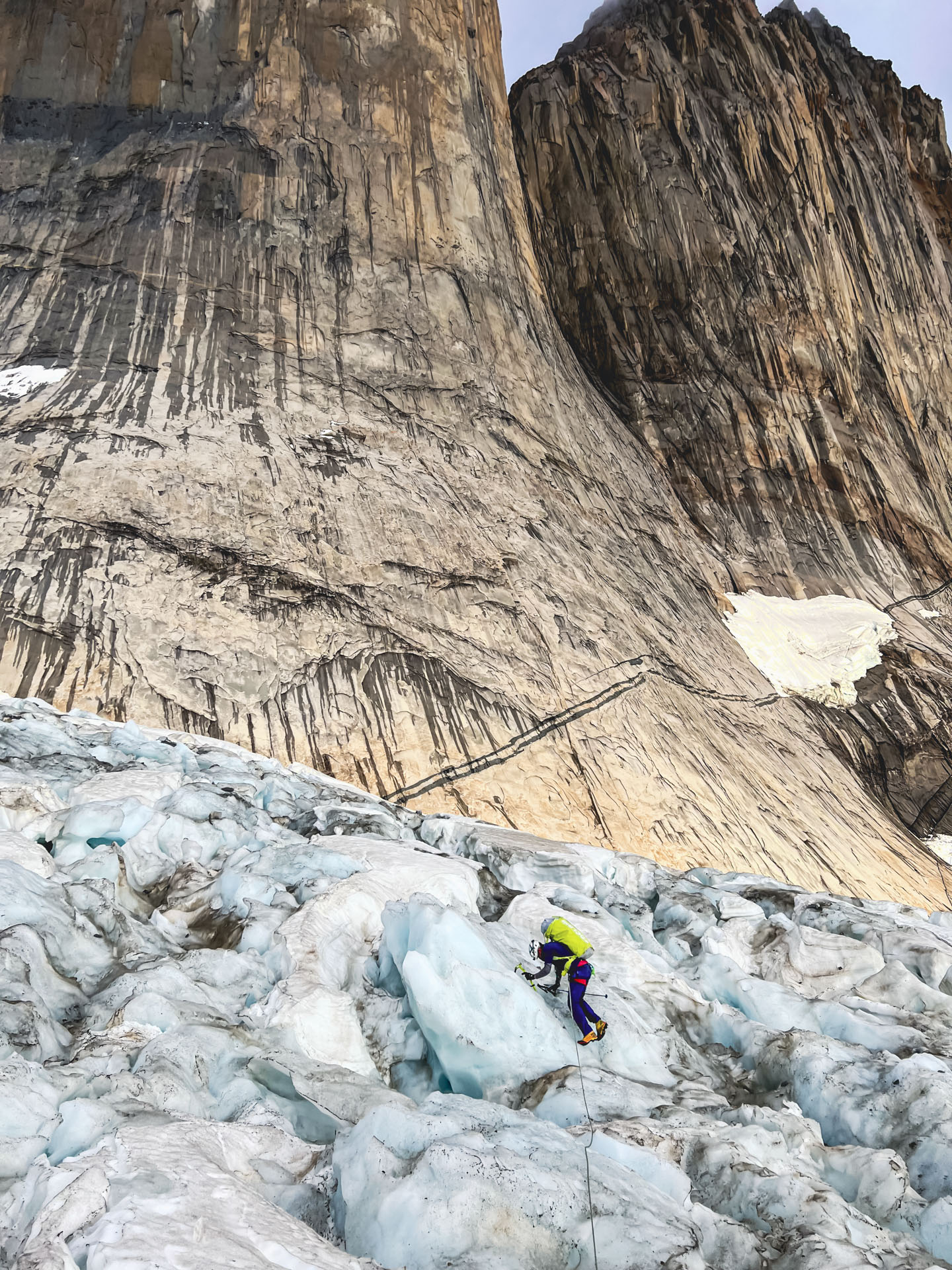
“In 2018, I came with Sean, who had the idea of doing this route quickly, without fixed ropes or portaledges. But in reality, the conditions are very difficult to achieve. You need good weather, of course, but you also need cracks free of ice to free climb,“ says Siebe Vanhee. Between the slabs at the bottom of the route, which were dripping with water, and the possible ice in the cracks, and the wind that froze their fingers, the chances of free climbing the entire route were ”incredibly slim.”
© Felipe Nordenflyght / Matthew Tangerman
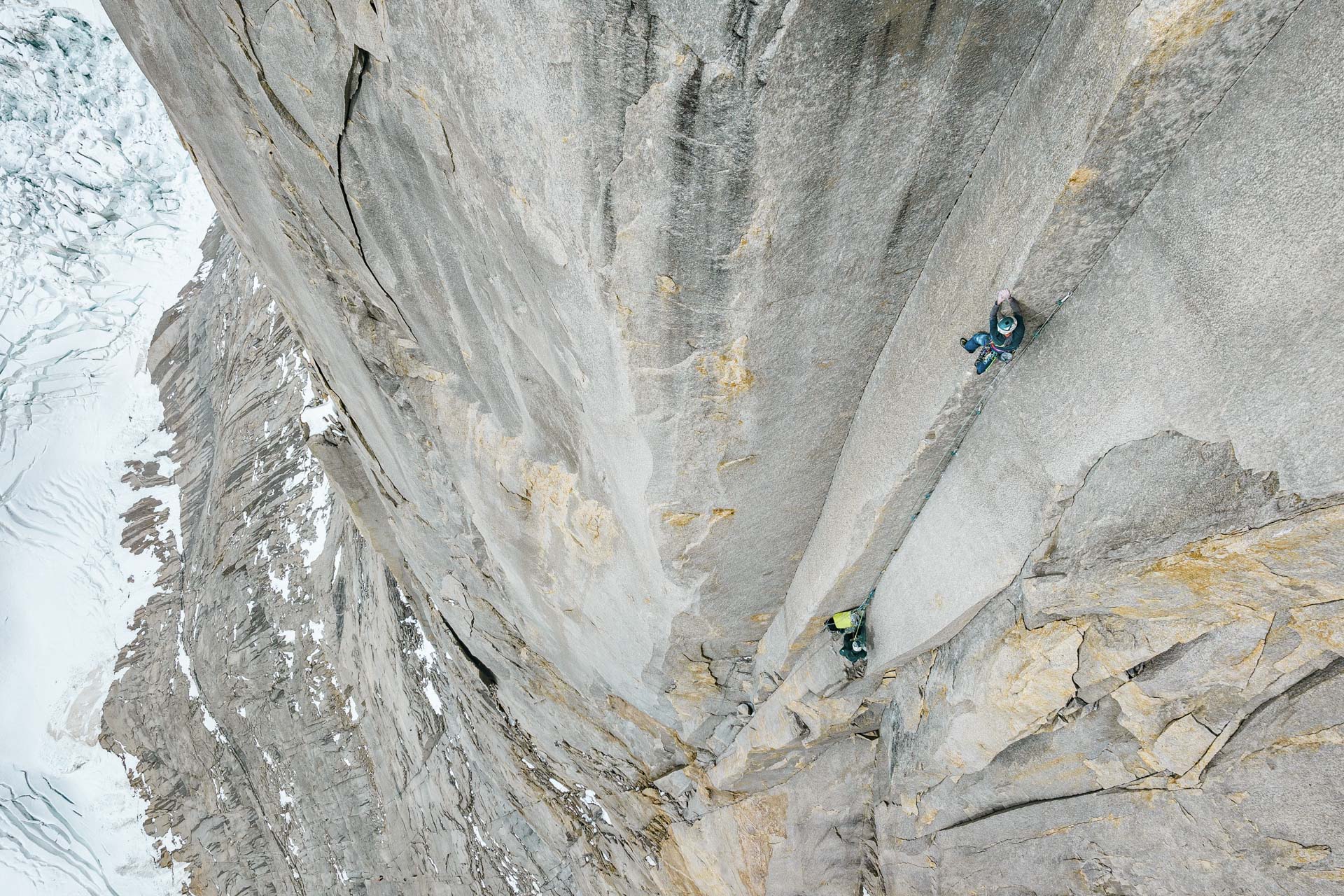
On their second attempt, the rope team was exhausted by the key pitches, the 14th and 15th. After that, there was another impressive key pitch: a 60-meter off-width crack rated 5.11+.
On February 13, they climbed as usual in sections. They knew two-thirds of the route, having climbed up to the 21st pitch in their previous attempts. They knew they didn’t have much margin for error in case of a fall if they wanted to try the pitch again, continue climbing, and save energy for the rest of the route and the last third of the climb, which they didn’t know.
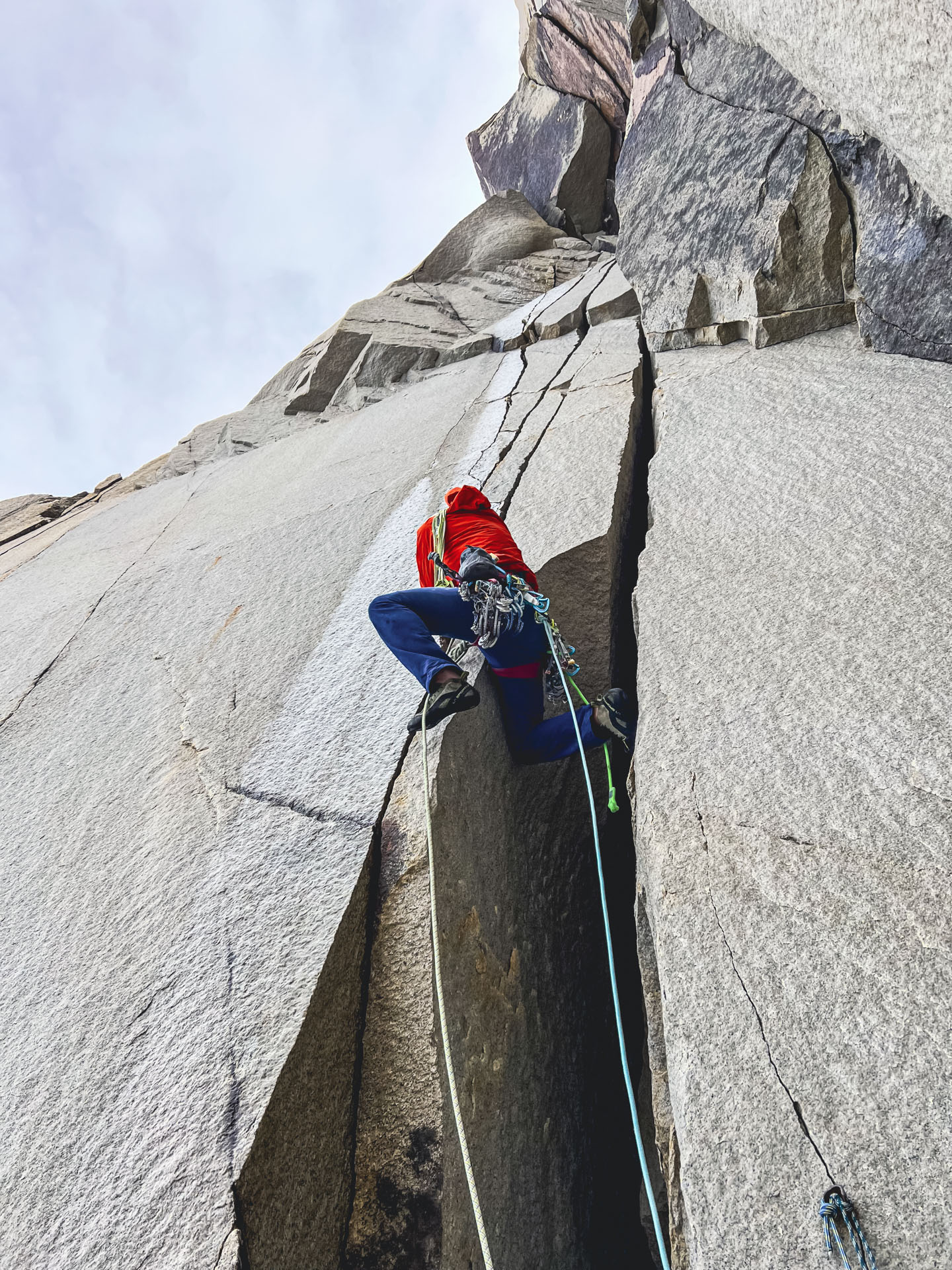
“From the 15th belay, I took the lead,” Siebe recounts. “I wasn’t climbing as easily as on our second attempt, but I managed to pass the belay and continue on to pitch 16. One more belay and we were at the foot of the most intimidating and longest pitch: the 60-meter offwidth crack. I was thrilled that Tommy was taking care of it. He had done an excellent job leading this big move last time with only a #6 Camalot!
But this time, Siebe Vanhee wanted to try the lead climb. It took him an hour and ten minutes to complete it. Tommy followed like a rocket, climbing in twenty minutes using the Dülfer technique. Continuing to climb, they reached the 24th pitch at ten o’clock in the evening. No more water in the flask. Alone after a kilometer of granite. There were still 250 meters of easier, mixed terrain to the summit. It was time to change shoes and continue climbing in the middle of the night.
Last time, Tommy had climbed the offwidth with just one No. 6 camalot.
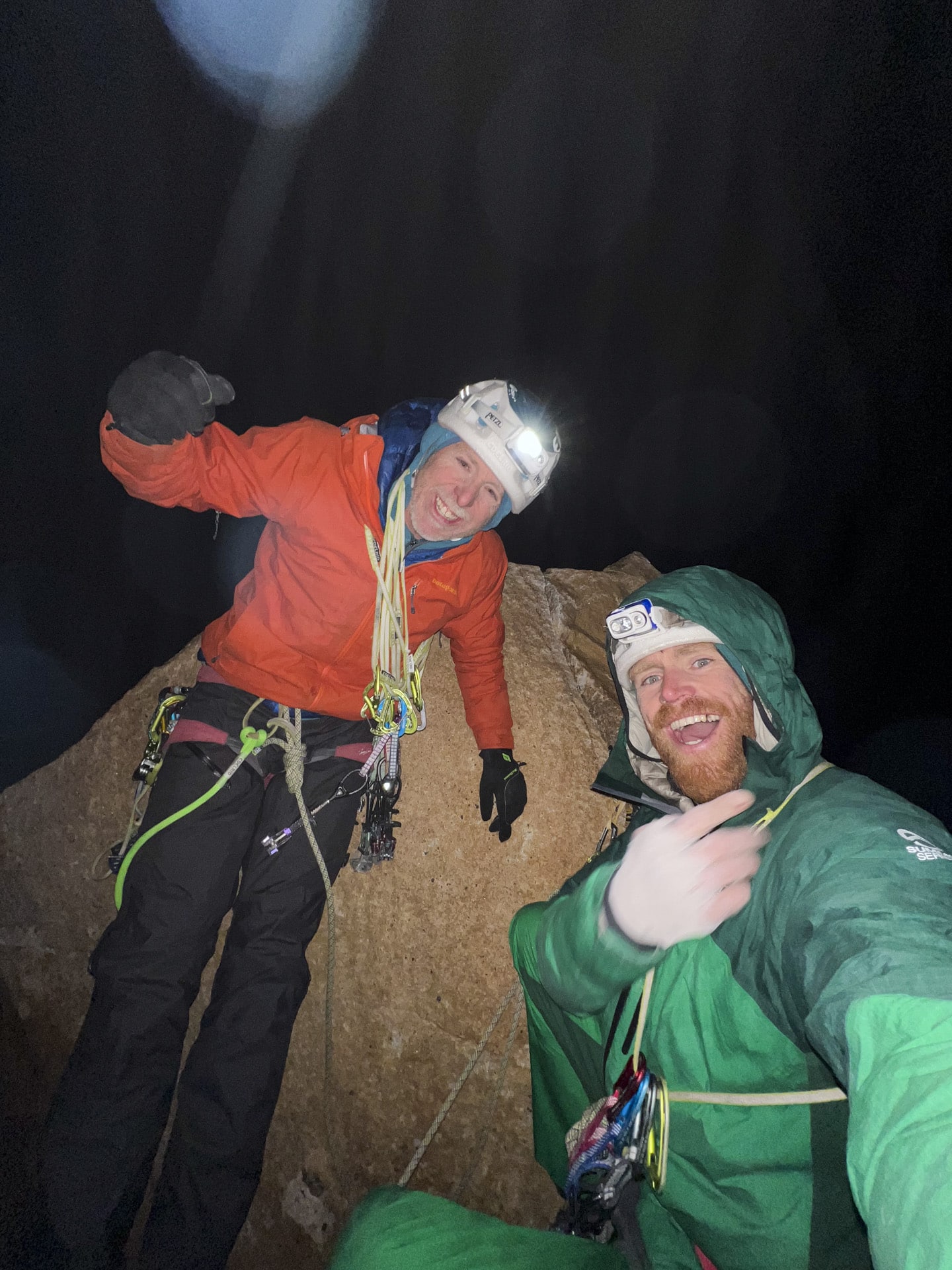
At 3:20 a.m., we reached the true summit. It was surreal. We had made it. Unlike the second attempt, I didn’t want to celebrate until we had actually reached the top. Even the shortest and normally easiest slab can become a real nightmare when there is ice in the cracks or when the wind picks up while temperatures are already cold. The traverse along the summit ridge made us feel like our attempt could end at any moment if the wind picked up or precipitation began to fall. Fortunately, that didn’t happen. After taking our selfie at the summit, the weather changed: the wind picked up and small snowflakes began to cover the rock. The descent was hellish, with updrafts and intermittent snowfall.
© Felipe Nordenflyght / Matthew Tangerman
©Siebe Vanhee / Tommy Caldwell
©Siebe Vanhee / Tommy Caldwell
The rope team returned to base camp on February 14. They had achieved their goal. And that is the strength of this extraordinary rope team. “Tommy has been an incredible force. He has proven time and time again that he can endure and that he will see things through to the end. He is positive about the past and optimistic about the future. I appreciate not only his skills, but also his intelligence, his thoughtful perspective, and his clear opinions on situations. Tommy is also a very pleasant person. He was the first to talk about a third attempt after we almost succeeded on the second. I can’t thank him enough for his commitment to this project!”
Le topo
A historic achievement
This is truly an extraordinary achievement, as it is only the third free ascent of the route. This deserves an acronym that nods to Yosemite, where NIAD (Nose-In-A-Day) is the benchmark for climbers’ talent (first NIAD in 1975 by Jim Bridwell’s rope team): at Torres del Paine, SAIAD was born: South African (route)-In-A-Day!
The Caldwell-Vanhee rope team also insisted on a true free climb, where every climber, even the second, climbs free. On paper, Vanhee says the grades are easier than Freerider (the “affordable” reference route on El Capitan, max 7c+).
But that’s where the comparison ends. On the Central Tower, the South African route climbs a huge line of dihedrals. Opened in 1973 and 1974, the route is very difficult and has never attracted crowds. Especially when free climbing, with cracks that get wider and wider as you get closer to the summit, according to Siebe Vanhee. The most difficult part? “The descent. Without portaledges or fixed ropes, you feel vulnerable. And as visibility decreases and fog increases, ropes get stuck and mistakes are costly.”