



Forty years ago, on May 11, 1986, Jean-Louis Étienne reached the geographic North Pole alone, after 63 days of walking and more than a thousand kilometers across the pack ice. Hauling his sled, pushing forward no matter what, through pressure ridges shaped by the wind, extreme cold — minus 52 degrees Celsius! — and the drift of the frozen Arctic Ocean. And then, at the end of this “inner pole” — his own phrase — becoming the first man to reach the North Pole solo.
Four decades later, the story has kept something both very simple and very powerful: a human being and a fixed, obsessive idea — the North Pole. A mythical place, where men had been trying to set foot since the late 19th century, and Frederick Cook’s attempt in 1908. What strikes us today is not only the feat itself. It is the silence surrounding it. No GPS. No satellite phone to send a voice message to the communications manager, let alone post a story. No weather map downloaded at the bivouac.
In 1985, Jean-Louis Étienne attempted the Pole and failed after fifteen days. He returned in 1986. Étienne moved forward with the sun, his instruments and his experience. A rudimentary Argos beacon made it possible to track his position and confirm his arrival. A thin thread to the outside world. Almost nothing, compared with today’s internet connection.
Today, eight-thousanders climbers have barely returned to base camp before their photos are already blooming across social media. Jean-Louis Étienne’s North Pole was an analog feat, from another era.
Forty years later, adventure has not disappeared. It has changed bandwidth. At Everest Base Camp, there is internet access, videos, images arriving almost in real time, forecasts and weather routers.
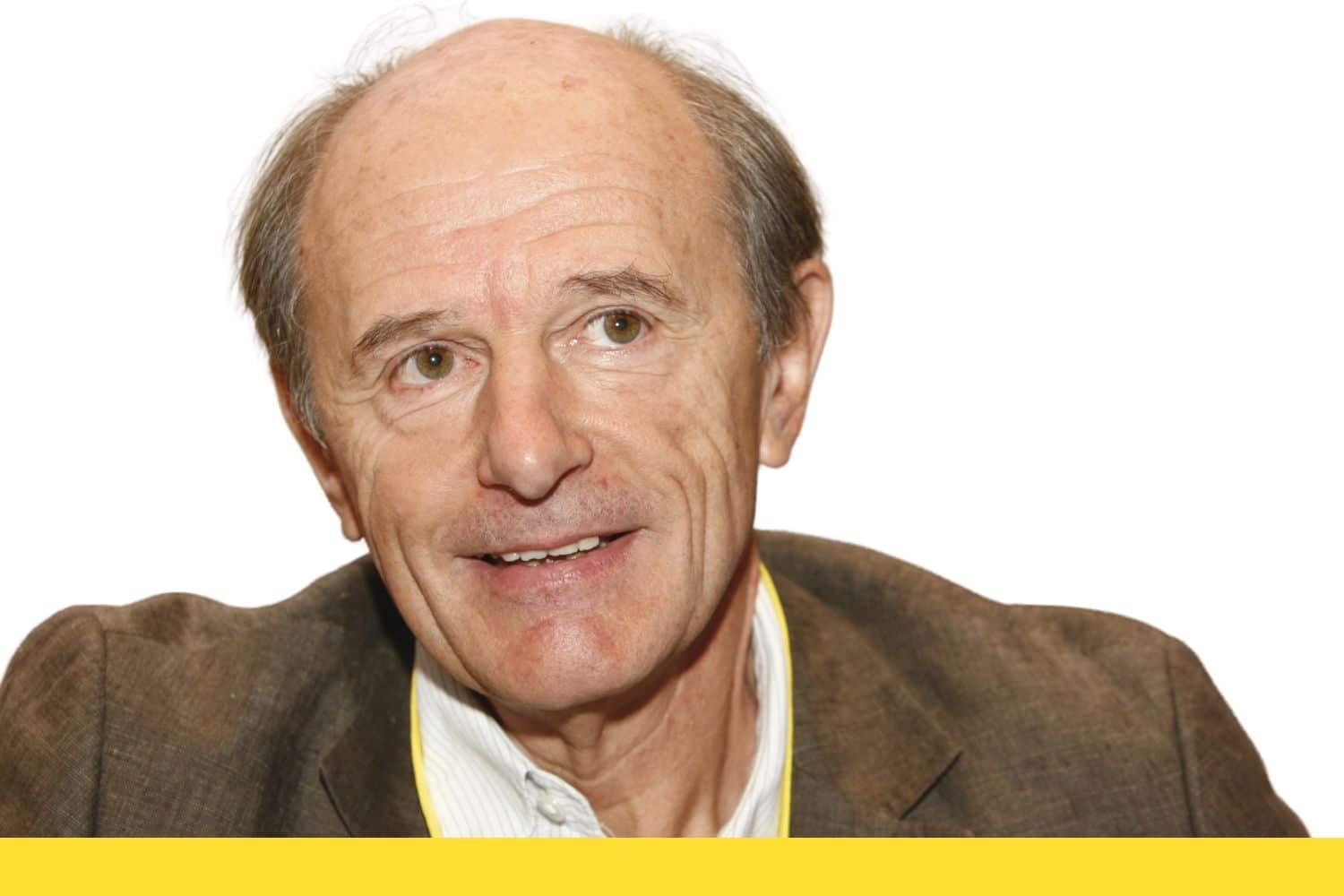
French doctor and explorer Jean-Louis Étienne.
63 days solo to the North Pole, without GPS or satellite phone. A feat.
In Antarctica last winter, Heïdi Sevestre and Matthieu Tordeur were able to share their crossing with a regularity that would have seemed extraterrestrial in 1986. Isolation still exists. So does the cold. So does commitment. But it no longer means quite the same thing. Above all, it is no longer told in the same way. Other polar adventurers remain in a more discreet register, like Vincent Colliard during his 22-day speed record to the South Pole.
Should we complain about that? Not necessarily. It would be easy to hand out good and bad marks from the comfort of our screens. Today’s explorers are not less exposed to wind or crevasses because they can send a photo.
But while the human being is more or less the same, the tools have changed. In 1986, you needed patience, endurance and, above all, you had to know how to use a sextant. In 2026, you can be tracked step by step — and, supreme irony, be doubted if you do not publish your GPX track. Money remains the lifeblood of adventure: as Jean-Louis Étienne himself points out, having had to raise the equivalent of €1.8 million for his boat Antarctica — later renamed Tara — “funding expeditions has always been complicated: in his time, Magellan took seven years to obtain the support of the Spanish Crown and carry out the first circumnavigation of the globe!”
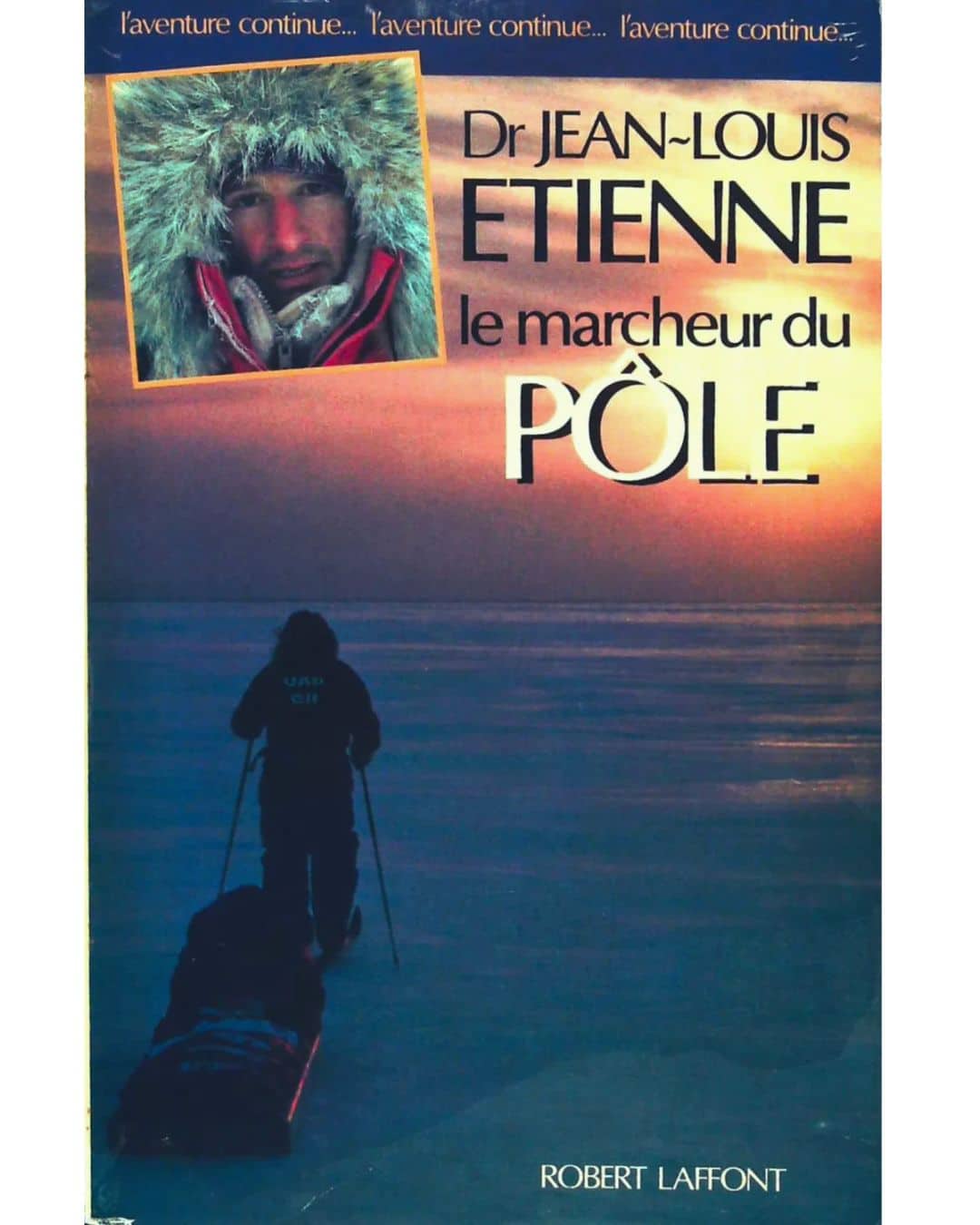
.
Exploration is not only a matter of technology. It is, first and foremost, a way of believing in the impossible
The anniversary of Jean-Louis Étienne’s achievement reminds us that exploration is not only a matter of technology. It is, first of all, a way of believing in the impossible, of living and breathing for a project.
Before the North Pole, Étienne was an expedition doctor for twelve years, a mountaineer in Greenland and on Broad Peak, and a sailor with Éric Tabarly aboard Pen Duick VI. Later came Transantarctica, the immense crossing of the southern continent by dog sled, followed by other polar adventures. There was also Erebus, an expedition to the great Antarctic volcano, an open-air laboratory rising to 3,794 meters on Ross Island.
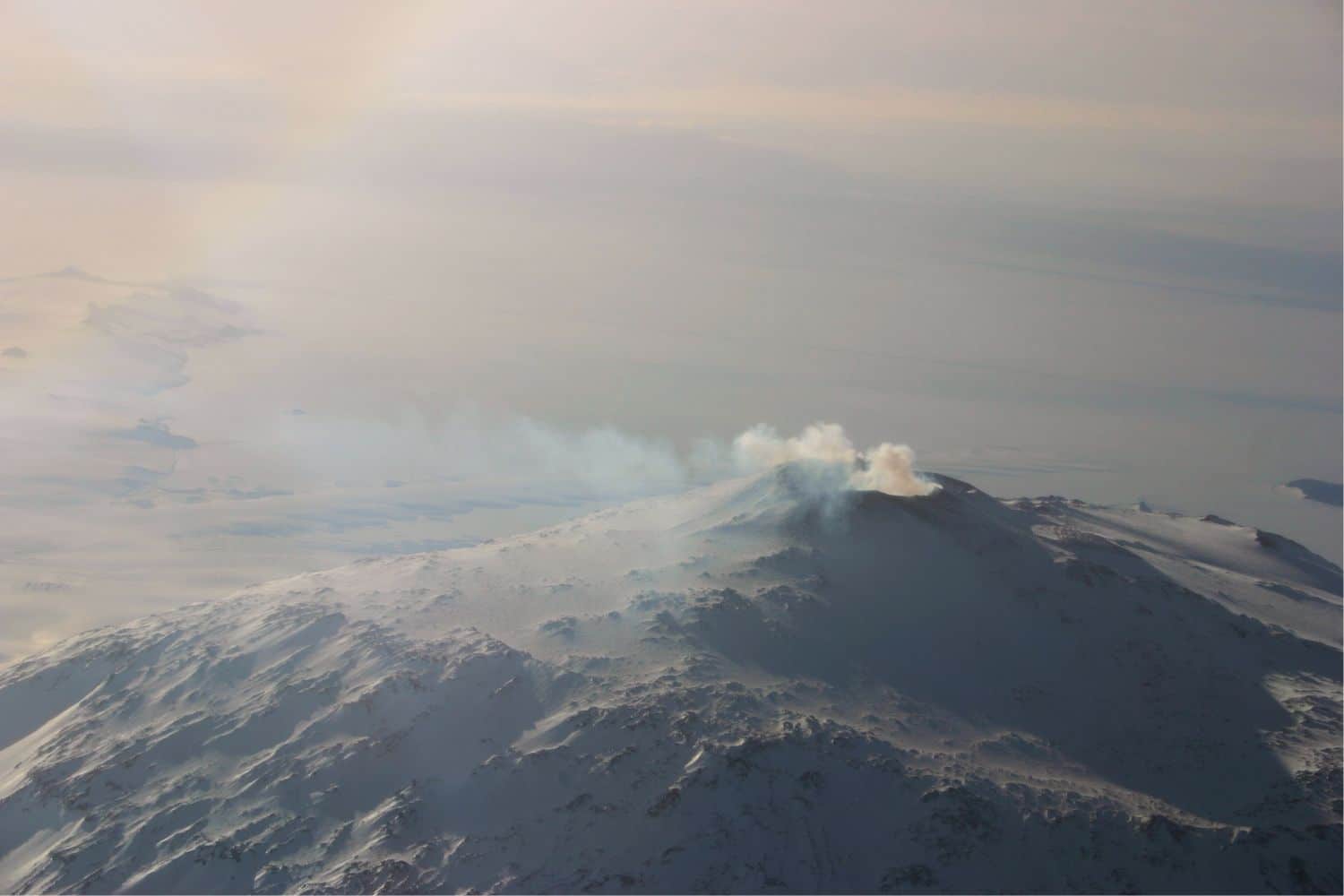
Erebus volcano, 3794 m.