


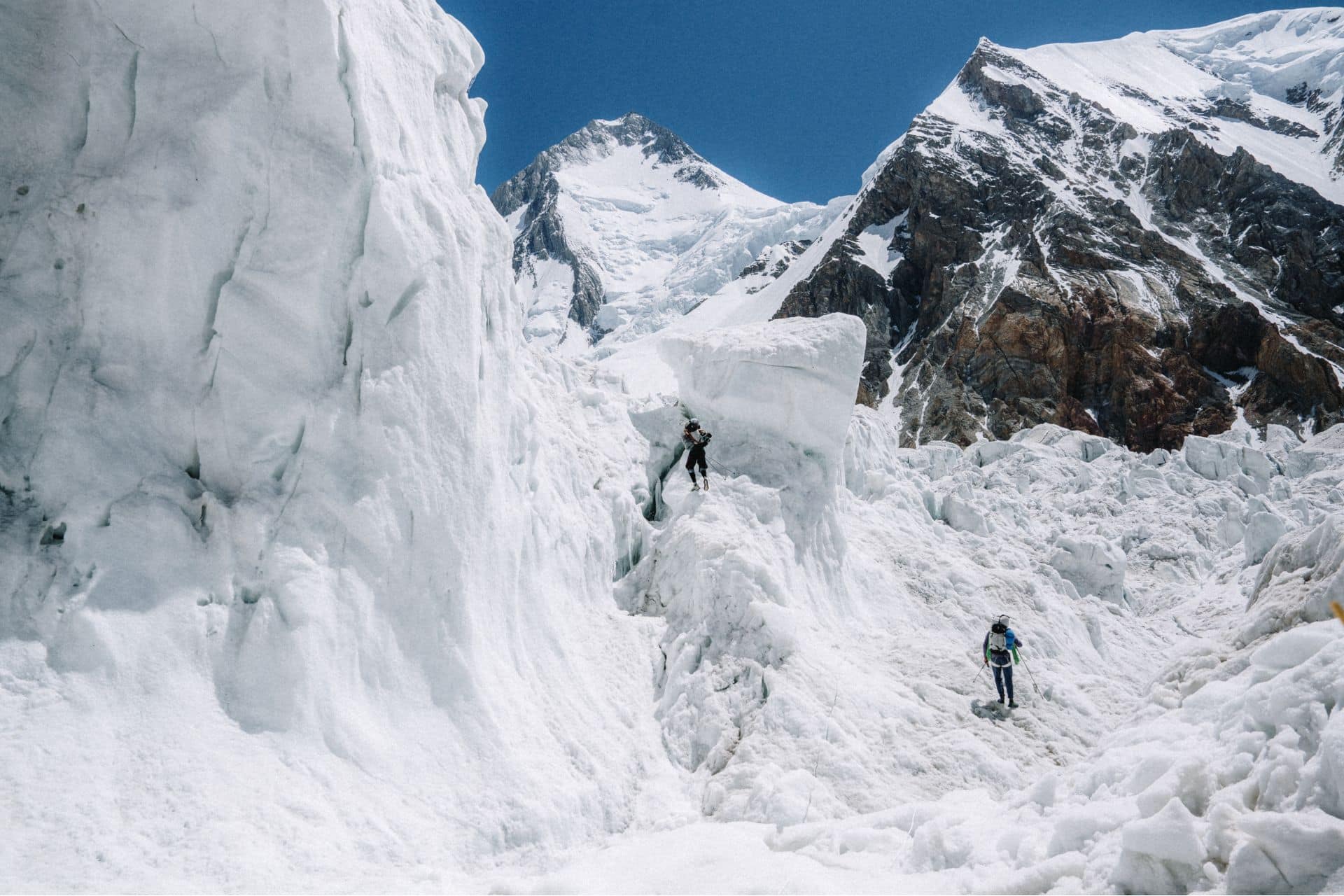
Back from Pakistan, Charles Dubouloz and Symon Welfringer did not reach the Gasherbrum IV as planned. They had to give up and turn back. On paper, it’s a failure. But from them, it is a precious experience, the courage to feel when it won’t work and, above all, the intact desire to return to these Himalayan walls. Symon tells us more about it.
«When you come back from an expedition, your head is all blurry. It is necessary to plow the ground, to clean and sort it, and then put new seeds. It’s my twentieth experience and it still does that to me every time », assures Symon Welfringer, back from Pakistan after an attempt on the south face of Gasherbrum IV with Charles Dubouloz. After an « attempt », since they turned back at 6,900 meters and did not reach the hoped summit at 7,925 m, planned, expected and a bit dreamed of.
They return from their adventure of several weeks without a new opening, without a new summit. Coult we therefore imagine that it is a failure, a major blow to moral, a certain disappointment, even the end of a cycle? But not really, after all. Because expeditions – especially on the highest peaks of the world – eks without a new path, without a marked peak. Could we therefore imagine that it is a failure, a major blow to morale, a certain disappointment, even the end of a cycle? But not really, after all. Because expeditions – represent much more than a summit to reach.
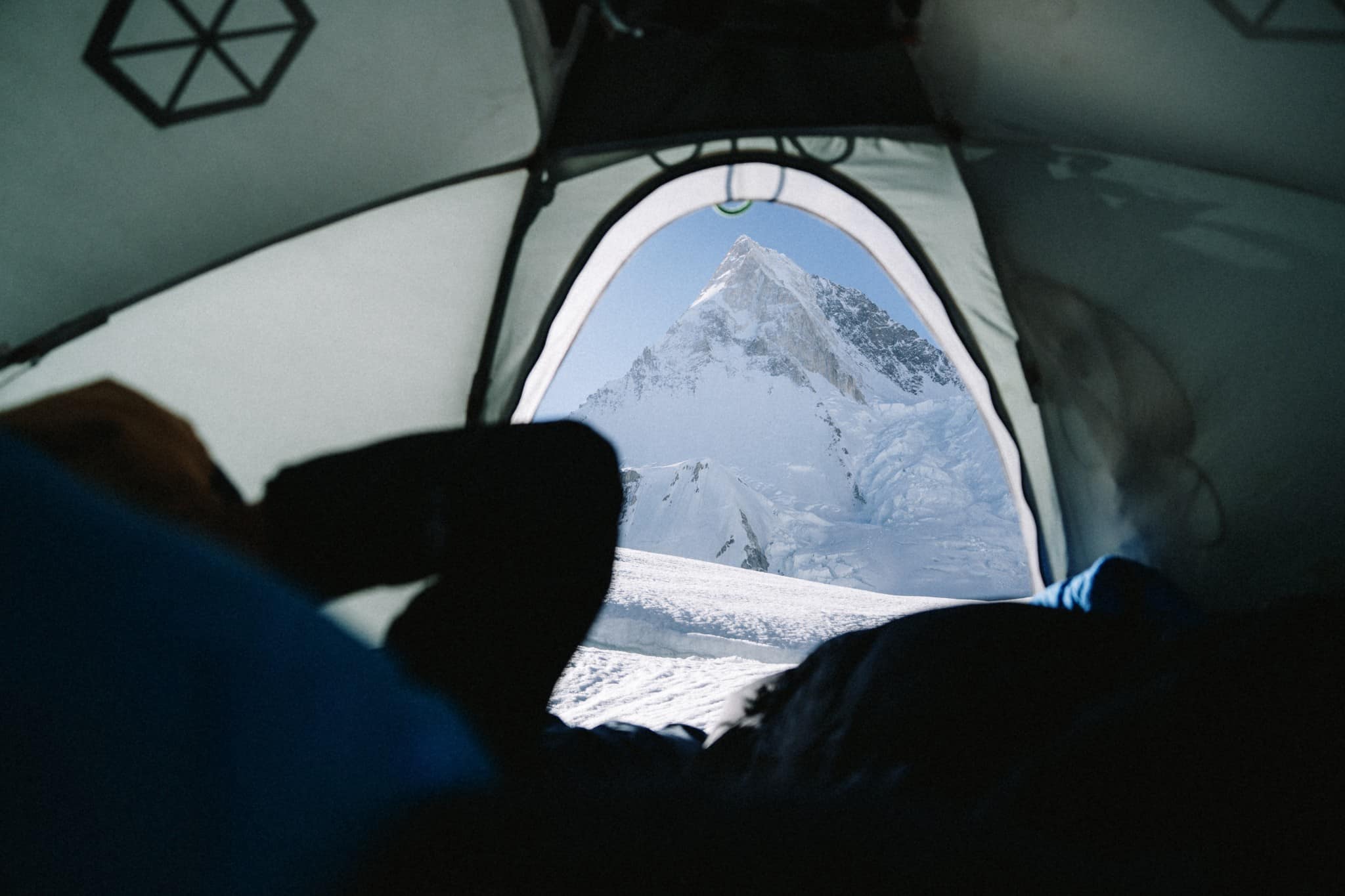
©Mathieu Ruffray
they were ready. But the summit has not been reached.
The causes? They are multiple
This summer, for Charles and Symon, there was no question of lack of training or health problems. On the contrary: they were ready. But the summit they were considering has not been reached. The causes? They are multiple. It is not the same situation as Jeff and George Lowe, Jim Donini and Michael Kennedy who went, in 1978, on a big expedition to climb the northern ridge of Latok I in Pakistan and who had to turn back, exhausted and without any food left, after having spent 26 days in the face.
No, this July, 2025, it is notably the climatic conditions are not great. Intense drought and ISO 0 degrees at 6000 meters do not allow the night freeze cycle to ensure hard snow at night and in the morning. “Without regel, everything becomes very complicated. […] Even in optimal conditions, the Gasherbrum IV remains one of the hardest mountains to climb. With the conditions we had, it became almost impossible,” summarize the two athletes, aware of the level of their dream summit. Especially since “at this altitude, on these faces, perfect conditions do not exist,” adds Symon.
Rather than a failure,
they see this as an experience
to take for the next expedition
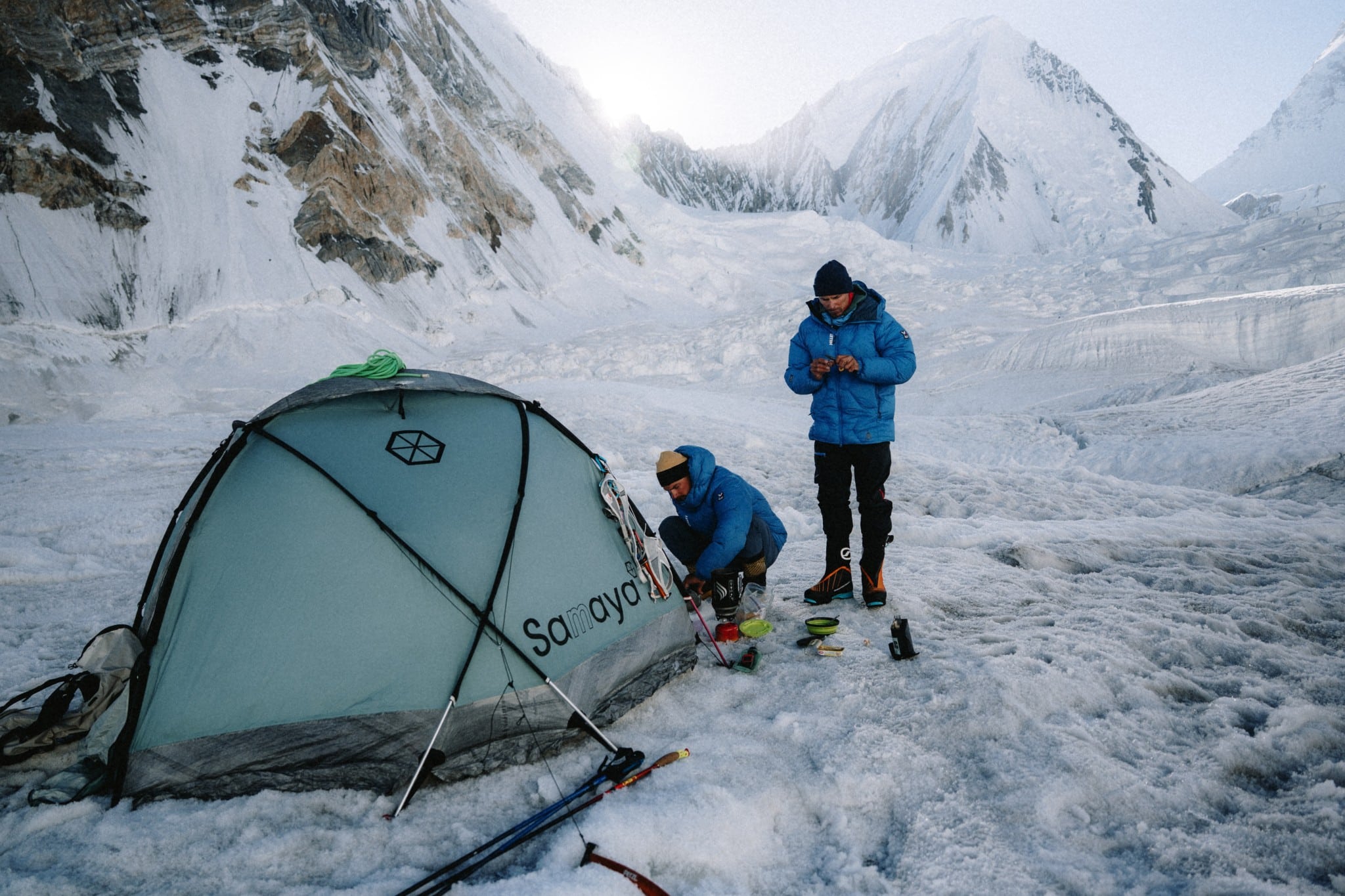
©Mathieu Ruffray
Plan A or plan B?
“Last year, we did not carry out our planned project, but our plan B, develops Symon Welfringer when talking about the Hungchi. It remained a rather crazy summit, with a real level. Once there, we quickly changed our minds and focused on the west face of the Hungchi [7029m]. But this year, we maintained our motivation and strengths much longer. We really tried, we carried the equipment at the foot of the wall, we didn’t change our tune when we saw the somewhat complicated conditions. We really bet everything on it, so I still find it cool to have had the courage to try this much. It’s the first time that we’ve given so much on a route of this level.”
Rather than returning disappointed not to have been able to realize their project, Charles and Symon see their time in the high mountains as a discovery, an experience to take for the next expedition. “This is the first time I’ve ever been home and I’m obviously a bit dissatisfied, but especially eager to try again and see how to do it better. How to use all the information we were able to acquire to optimize the next trial.”
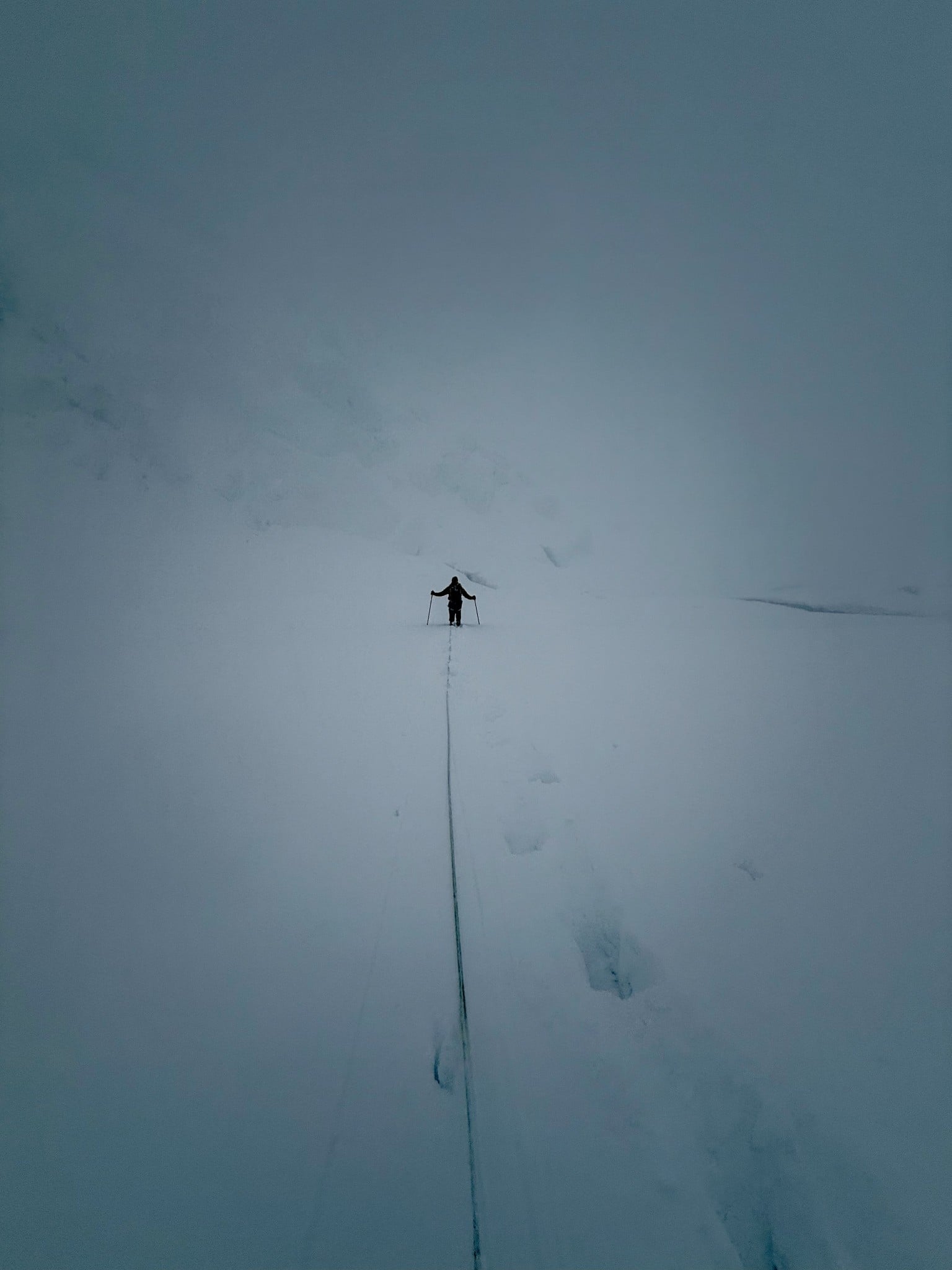
©Coll. Welfringer/Dubouloz
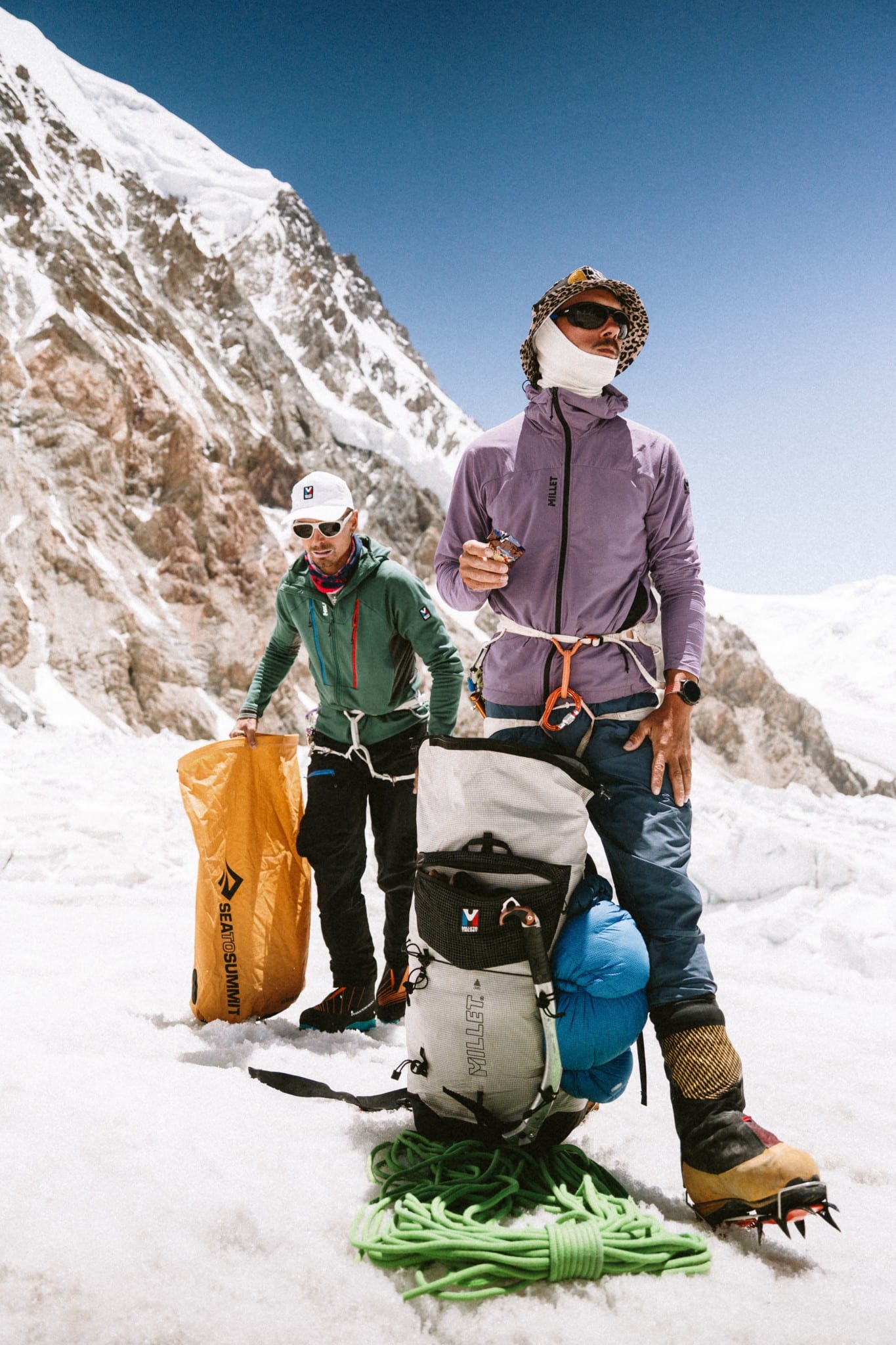
©Mathieu Ruffray
we wondered if it was because of the conditions
or if we were just not motivated enough
Everything is played in a balance between the weather conditions, physical conditions and the motivation of the mountaineers. In the case of Pakistan 2025, Charles and Symon were able to get a closer look at what is a very high level route in the Himalayas. Certainly, readers, spectators and mountain enthusiasts are more used to matching successful expedition with reached summit. But on the side of the mountaineers, other aspects allow to be satisfied with this adventure: their training and their technical level were at a really good level.
What leads to the decision to turn back after two days of intense effort can also be due to fluctuating motivation. «We were somewhat affected by Charles’s fall into a crevasse – which fortunately ended well – and by the fact that access to the track and the material deposits (at an altitude of 6500 meters) took up much more energy than we thought, concedes the thirty-something. Because you have to believe in it completely when you get into it. While turning around, we wondered if it was because of the conditions or if we were just not motivated enough to succeed in this kind of climb.”
What stresses me out is the danger and risk related to the accident.
Not screwing up a potential movie because I’m not going to the summit
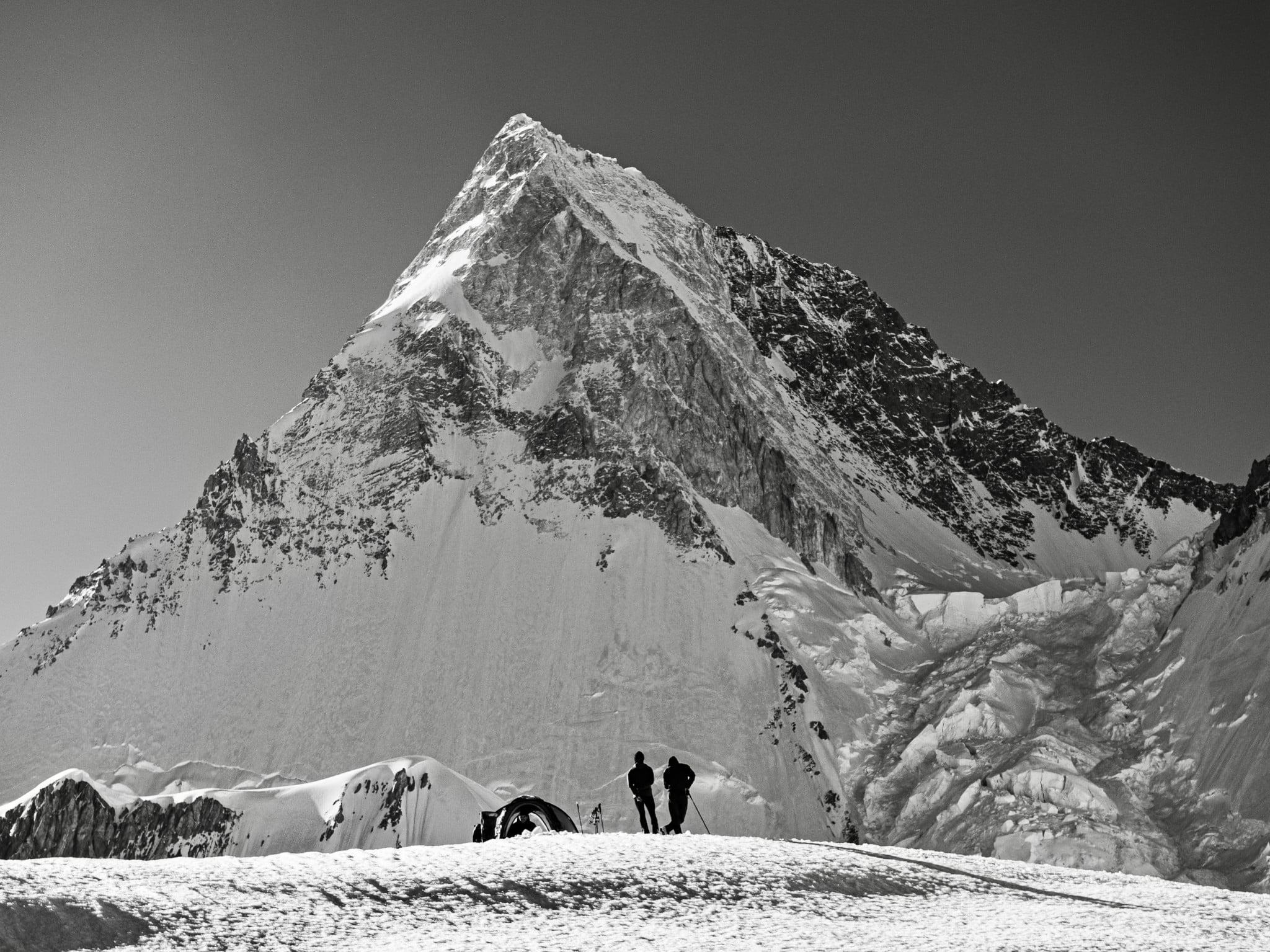
©Mathieu Ruffray
The right decision
With hindsight and the return to France, despite what is directly called “a failure“, the two mountaineers believe they have made the right decision by turning back. The few expeditions that ended by a reached summit this summer, the numerous accidents in the nearby mountains… Symon believes that continuing would have been “going to the breakneck. While the priority remains totally remains to return to France alive. So we are rather happy!”
What about possible pressures from sponsors, films planned by brands, external people involved in such projects? “From the start, it’s very clear: Mathieu, our photographer, knows that there is very little chance of success, explains Symon. What he comes for is something else. If he wants to make a documentary, he will be interested in what revolves around the expedition. Inevitably, the images and the film he can eventually make will not be the same. It will have a different impact.”
opening a new route on the G4, as a pair, in pure alpine style,
one factually have a 5% chance of success
On the brand side, the two mountaineers are lucky: with already many ascents, repetitions and openings, they do not have to “prove” their level and therefore their contract with this or that sponsor. “We are quite calm and clear with our partners now not to worry about that when we go on an adventure. It’s a great chance. My only weight, pressure, call it what you want, is to return alive for my loved ones. What stresses me out is the danger and risk related to the accident. Not screwing up a potential movie because I’m not going to the summit. Because, even without a summit, one discovers plenty of things even at base camp and during acclimatization.”
So, in two to three years’ time, Symon Welfringer intends to form a team of 3 or 4 mountaineers to return there. “In such a project, opening a new route on the G4, as a pair, in pure alpine style, one factually have a 5% chance of success. Once on site, with the material deposits, the body responding well, the weather acceptable, the companions who are cool, in our heads, the probability goes up to 60%. And when the time comes to try, we remember the 5% chance of success and it was rather that which was fair.”